Show Me the Monet
In my own meditation practice, and often when I guide others, I go to the edges of my body and investigate whether I can determine where this body ends and the space around it begins. In somatic work, there is also recognition of the "subtle" body, which we sense surrounds what we consider the physical body. As I meditate in this way, the boundary that I assume separates me from what's around me—and from what I'm in contact with—seems somewhat ephemeral.
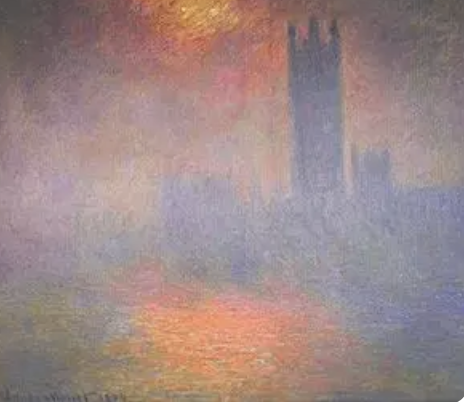
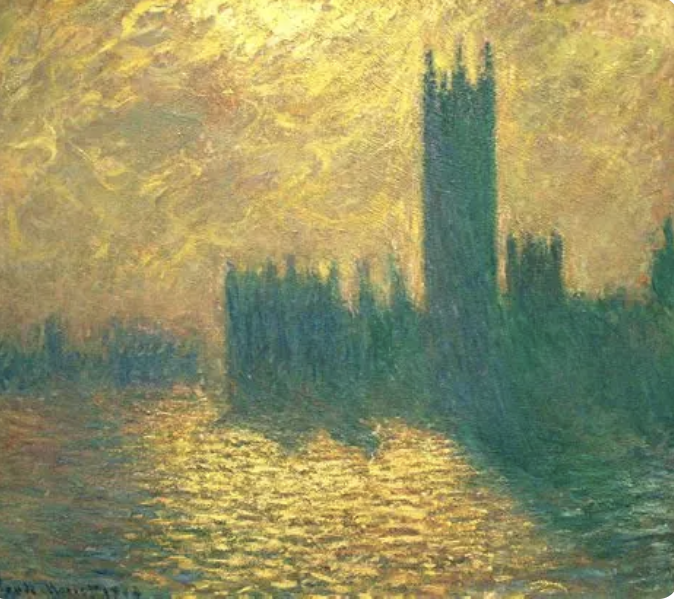
Now that I'm living in Chicago, I recently became a member of the fabulous Art Institute, certainly one of the great museums of the world. Among other things, it has an extensive collection of Monet, including six of his Haystacks, which highlight the changing air and light surrounding haystacks. There are also several paintings from his time in London: one of a bridge over the Thames and another of Parliament. The haystacks and buildings are apparent objects, but the subjects of these paintings are not the objects themselves but rather the changing light around them.
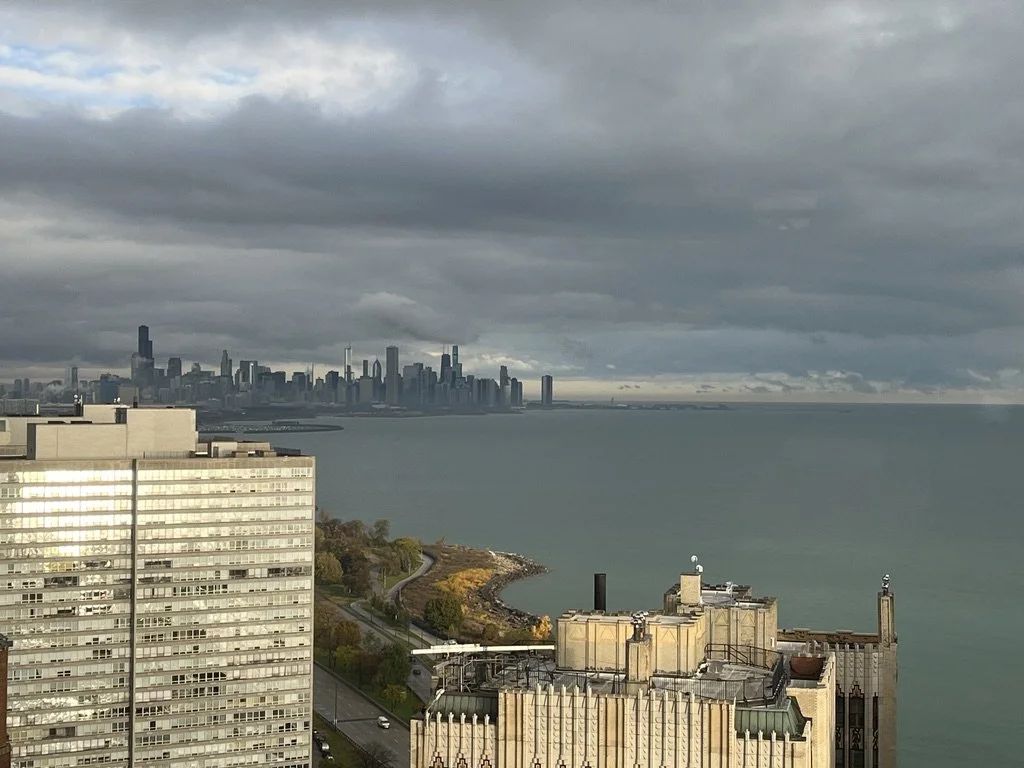
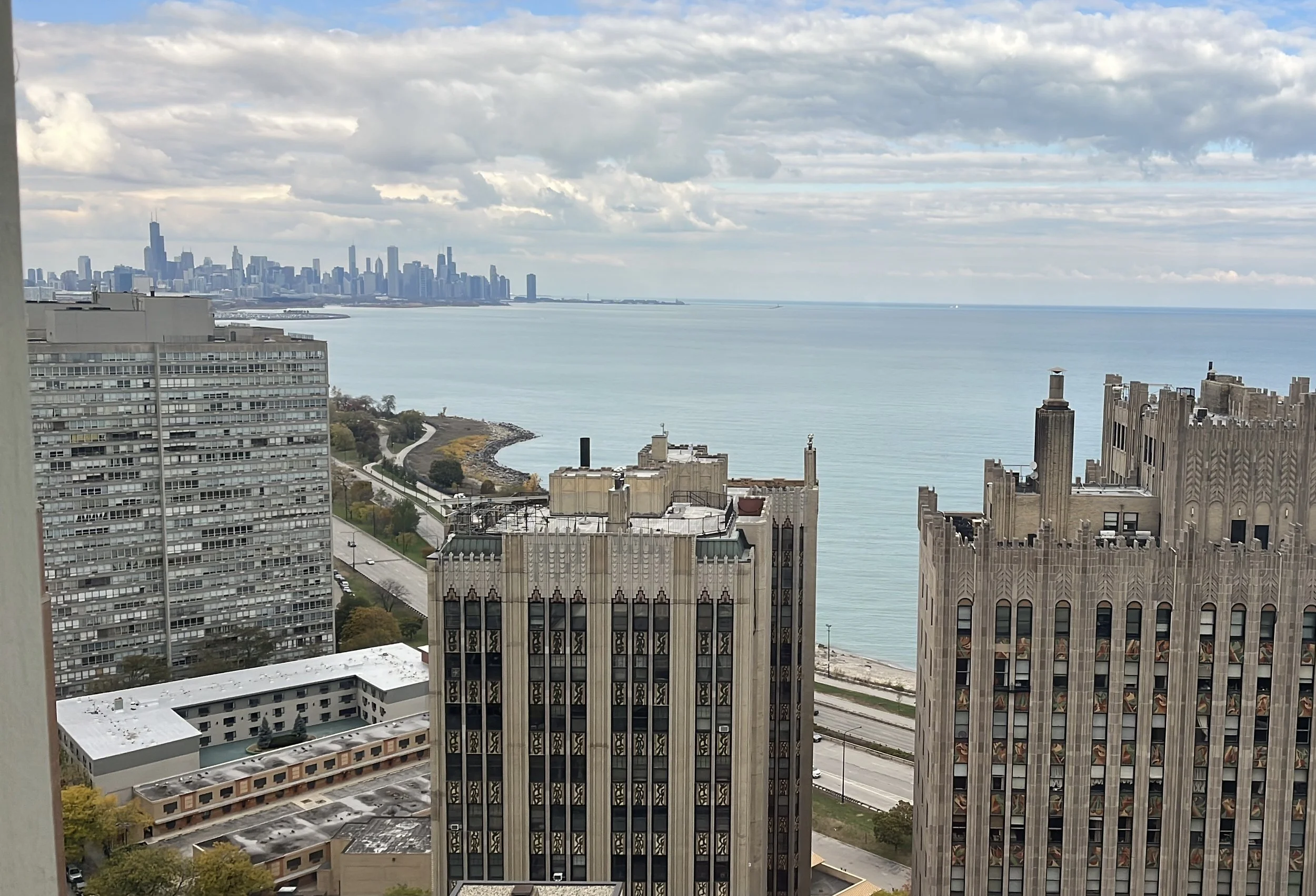
From my apartment, I see the marvelous skyline of Chicago and Lake Michigan. I think of Monet, who wrote, "I want to paint the air in which the bridge, the house and the boat are to be found—the beauty of the air around them, and that is nothing less than impossible." I can gaze at the cityscape and lake for hours, and the changing light and air create a moving picture. The objects become secondary to everything else. As I write this, there is a snowstorm in progress, and the only things visible are the buildings next door, shrouded by snow. Nothing but gray and white, and downtown Chicago is completely gone. The boundaries of the buildings next door, seemingly solid, are far less so than I think.
As I consider the sense of me, I feel the nature of this mind and heart. The internal weather patterns are constantly changing. Moods come and go—ruminations, annoying memories, worries about the future—all continually arising and fading away. How do these affect what others see of me externally? And naturally, the changing external weather and light can have a potent impact on how I feel my "self" at any given time. The moment I start to reify this self, ignoring the changing internal and external weather, I experience some level of dis-ease, or dukkha. When I let go into this continual show of experience, that me that was once the object is nothing more than a momentary manifestation existing within the space of air and light.
And of course, those whom I see (and you see) in any moment are not objects but momentary manifestations. They exist within the space of air and light—literally, of course—but also within the space and light and weather of my mind at that moment. In many ways, we are nothing more than a continually changing pattern of this weather and light. A well-known quote, usually (but incorrectly) attributed to Anaïs Nin, says, "We don't see the world as it is, we see the world as we are." The weather patterns of this mind will always change my perception of what's in front of me. The external weather will usually change my perception of what's in me!
Hopefully, mindfulness will know this and regulate my response as needed. Of course, first, mindfulness needs to be curious and aware of what's here. Will it be a clear sunny day, or a gray rainy one?
Maybe it will help to keep Monet in mind!